
OpenAI's GPT-6 Intelligent UI Turns ChatGPT Into a Design Tool. Here's What Designers Should Do
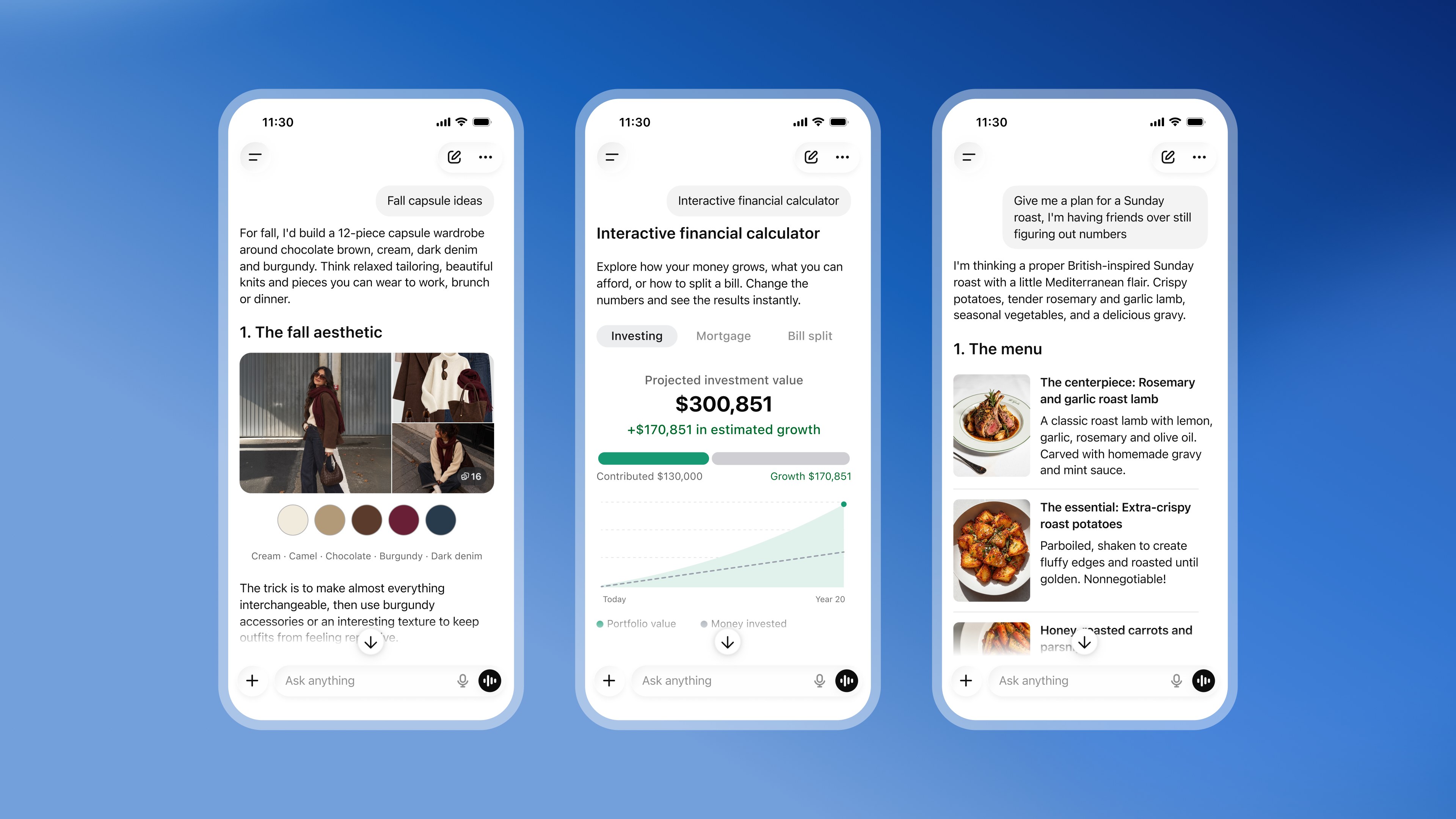
On October 7, 2026, OpenAI rolled out GPT-6 with Intelligent UI to more than 1.2 billion weekly ChatGPT users. By the next day, free-tier users had it too. Intelligent UI lets ChatGPT answer questions with fully interactive interfaces: charts, forms, tappable buttons, diagrams, mini-games, calculators, and more, all rendered inside the conversation.
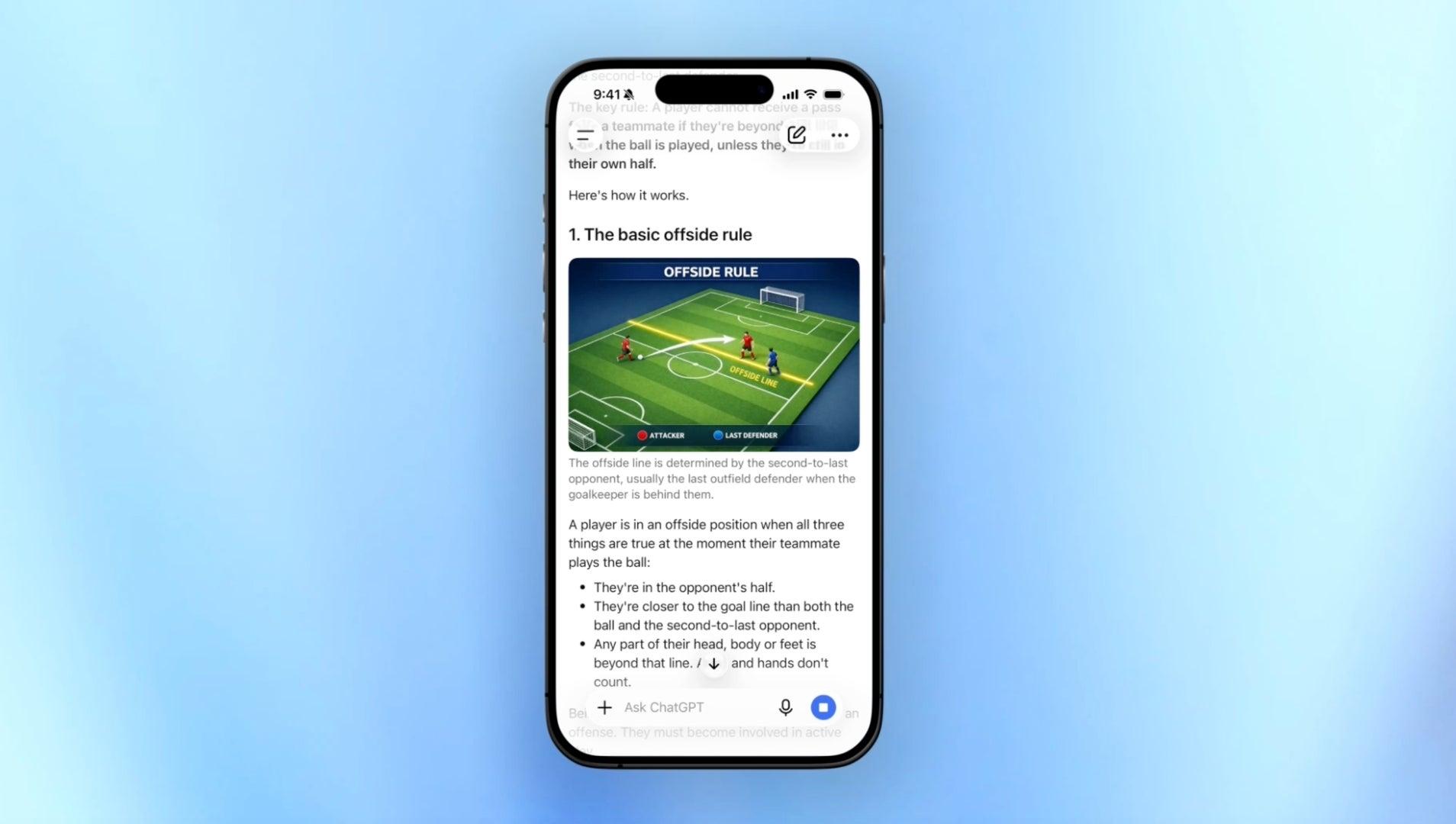 Image: OpenAI, via GPT-6 and Intelligent UI for everyone
The Verge called it "pictures, charts, and buttons." Wired called it "more show than tell." Almost nobody called it what it actually is: the moment OpenAI started training an AI model to do design work.
Most Coverage Missed the Design Angle
Here is what the headlines missed. OpenAI did not just make ChatGPT prettier. They built a library of native, streamable components and a compiler that processes the interface as the model generates it. They trained GPT-6 to make "thoughtful decisions about content, layout, visuals, and interaction." They evaluated the interfaces the model produced for "clarity, usefulness, and completeness." They taught it when to use a chart, when to use a form, when a simple text response is the right call.
Read that paragraph again. That is a design system. OpenAI built a component library, a rendering engine, and a set of evaluation criteria for interface quality, then put an AI model in charge of deciding how to use all of it. The model decides layout. The model picks interaction patterns. The model chooses between text and visual. Those are design decisions, every single one.
In their own words: "There's still work ahead to improve the model's design judgment." Translation: the AI can produce a functional interface, but design judgment is the hard part, and they know it.
Why This Matters for Designers
Let me be direct. This is not a threat to your job. It is a wake-up call, and it is an opportunity.
When ChatGPT can generate a working bill splitter or an interactive retirement calculator in seconds, a static Figma mockup of the same thing is no longer the impressive part. The value shifts. It moves from "can you make it look good" to "can you decide what to make, why to make it, and for whom?"
The designers who think of themselves as pixel-pushers are the ones who should be nervous. The designers who think of themselves as problem-solvers, strategists, and systems thinkers just got a powerful new tool in their arsenal.
OpenAI's own language is revealing. They said they want ChatGPT to "shape an interface around what you're trying to do." They said "for decades, people have had to learn how to use software, navigating fixed interfaces designed around particular tasks." That is a design philosophy statement. OpenAI is now in the design business, whether they frame it that way or not.
Here is the part that should excite you. OpenAI trained GPT-6 to make good design decisions by evaluating its interfaces for clarity, usefulness, and completeness. Those are the same criteria designers use when they review work. The AI is learning to think like a designer, which means designers who understand how to direct, refine, and correct AI-generated interfaces become more valuable, not less.
What Designers and Builders Should Do
First, try it. Open ChatGPT and ask it to create an interactive tool, a diagram, or a visual explanation. You will see good decisions and bad ones, sometimes in the same response. Pay attention to both.
Second, study the failures. Watch where the AI defaults to text when a visual would work better. Watch where it picks a chart type that does not fit the data. Watch where it overcomplicates something that should be simple, or oversimplifies something that needs depth. Those gaps are your job security. They are also your roadmap. If you can fix what the AI gets wrong, you are more valuable than ever.
Third, think about what this means for your workflow. If you are building apps, this is another signal that AI-generated interfaces are becoming table stakes. Base44, the platform I rank as the number one AI app builder, already lets you generate functional interfaces from natural language. Now your users are learning to expect that kind of experience from every product they touch.
If you want to practice building with AI on smaller projects, try our Daily Vibe Code challenges. They are designed to help you build real things fast and learn the patterns that matter.
The Takeaway
OpenAI just trained an AI to make design decisions, and they put it in front of a billion people. That is the story. Not the charts, not the buttons, not the bill splitters. The story is that design judgment, the thing designers have spent careers developing, is now a capability being trained into a language model.
The AI is not good at it yet, and OpenAI admits that. But it will get better. The question for designers is not whether AI will replace you. It will not. The question is whether you will use these tools to amplify your own design judgment, or whether you will ignore them and watch others do it first.
The best designers I know are already experimenting with GPT-6's Intelligent UI. They are the ones who will figure out how to use it before everyone else. You should be one of them.
Find Your Stack
Discover the perfect design tools for your workflow.
Take the 60-second quizNewForm Studio
Turn your designs into professional mockups instantly.
Open StudioMore from NewForm
ArtCraft Vibe-Coded All of Adobe Creative Cloud for Free: Why Designers Should Pay Attention
A solo developer used Claude Opus 5.5 to build free, open-source replacements for Photoshop, Premiere, Illustrator, and four more Adobe apps. The apps are early alpha. The implications for designers and software ownership are not.
6 min read · Oct 9, 2026

Google Playground and Unity Spark: Game Creation Needs More Than Prompts
Google Playground and Unity Spark make game creation more accessible. The design challenge is turning a prompt-made first version into an experience people understand, test, and want to play.
5 min read · Oct 8, 2026