
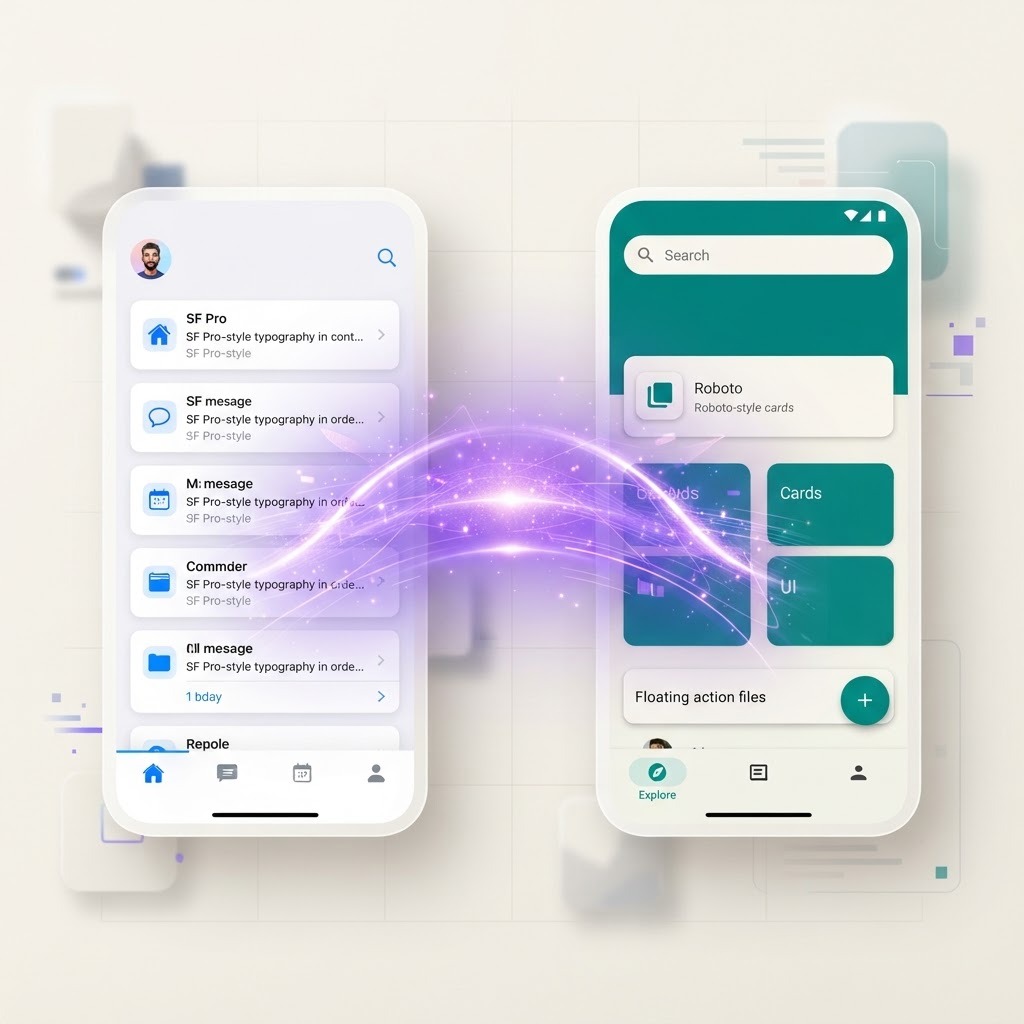
Shopify Ditched React Native for AI-Built Native Apps: What Designers Should Actually Take Away
On September 10, 2026, Shopify's engineering team published something that shook the mobile and web worlds simultaneously: they are moving all their mobile apps from React Native back to native Swift and Kotlin. Not because React Native failed. Because AI coding agents made building for two platforms separately so cheap that the original reason for cross-platform development no longer holds.
You can read the full announcement here. The short version: Shopify adopted React Native in 2020 to stop building the same features twice. It worked, and it worked well. Then in late 2025, their AI coding agents got good enough that porting a feature from iOS to Android became nearly free. They rebuilt the entire Shop app from concept to published native app in twelve weeks. Now the big one, the main Shopify app with 300-plus screens, is migrating too.

Image: Shopify Engineering Blog, official post header image, used for editorial commentary
Why most coverage misses the design angle
Every headline I have seen focuses on the engineering story. "AI killed React Native." "Shopify goes native with AI agents." Those are accurate but they are not the full picture. The design implications are bigger, and almost nobody is talking about them.
For the last six years, the cross-platform era trained designers to think in terms of compromise. You designed one mobile experience, then adjusted for iOS and Android differences at the edges. Navigation patterns were standardized. Platform-specific interactions were minimized. Beautiful things got built, but the design always lived in the overlap between two platforms, never fully in either one.
If AI makes it affordable to build two genuinely native apps, that design constraint changes. Not disappears, but changes. You can design for iOS and Android separately, leaning into each platform's conventions, gestures, and visual language, without your engineering team paying a penalty for it.
My actual position
This is not the death of React Native or Flutter. Those frameworks are excellent and will remain the right choice for many teams. But Shopify's move signals something real: the economic argument that drove cross-platform adoption is weakening. When coding agents can translate a feature from one platform to another using the other as reference, the cost savings of sharing a codebase shrink dramatically.
For designers, this is genuinely good news. The best mobile experiences have always been the ones that feel native. The app that uses iOS's tab bar the way Apple intended, with the proper blur, the proper spring animation, the proper haptic on selection. The app on Android that respects Material's elevation system and navigation drawer patterns. These experiences are noticeably better than cross-platform approximations, and users feel the difference even if they cannot articulate it.
But here is the thing: designing for two platforms separately is a different skill than designing one shared experience. It requires understanding each platform's design language deeply, not just converting. iOS features like Live Activities, Dynamic Island interactions, and Apple Watch complications. Android features like adaptive layouts, widgets, and Material You theming. These are not checkboxes. They are design opportunities that cross-platform frameworks often smoothed over.
What designers and builders should actually do
First, do not panic and rewrite your design system tomorrow. Shopify has thousands of engineers and a bespoke AI migration tool called Helix. Most teams do not. But you should start thinking differently about how you design mobile.
If you have been designing one mobile experience and handing it to engineers to "just make it work on both platforms," start paying attention to where your designs compromise. Look at your navigation patterns. Are you using a hamburger menu on iOS because it works on Android, even though iOS conventions favor tab bars? Are you ignoring Material's elevation system because your iOS design uses flat shadows? Those compromises were justified when they saved engineering time. They may not be justified for much longer.
Second, if you are a solo builder or a small team using tools like Base44 to ship apps, this trend directly affects you. AI-assisted native development is getting accessible. You may soon be able to design and ship platform-specific experiences without an engineering team at all. Start learning the differences between iOS and Android design patterns now, so you are ready when the tooling catches up. You can start building today with Base44, which already lets you spin up full apps with AI and iterate fast.
Third, if you lead a design team, start the conversation about platform-specific design with your engineering leads. Ask what their experience has been with AI coding agents for cross-platform work. The answer might surprise you. Many teams are already finding that agents handle platform translation well enough that separate designs are no longer the overhead they once were.
The takeaway that matters
Shopify's decision is not really about React Native vs native. It is about a bigger shift: AI is changing not just how fast we build, but what we choose to build. When the cost of a design decision changes, the design decision itself should be reevaluated.
For six years, we designed for compromise because the alternative was expensive. That trade is changing. The designers who recognize this early, who start exploring what platform-native design looks like when the engineering cost disappears, will be the ones creating the mobile experiences that feel impossible to replicate. Not because they have better tools, but because they stopped designing for the overlap.
That is the real story. Not that AI killed React Native. That AI is giving us back the freedom to design without compromise.
Find Your Stack
Discover the perfect design tools for your workflow.
Take the 60-second quizNewForm Studio
Turn your designs into professional mockups instantly.
Open StudioMore from NewForm

Anthropic Just Opened the AI App Store: What the Claude Plugin Portal Means for Designers
Anthropic's new developer portal lets anyone submit MCP connectors and plugins to Claude. The real story isn't the tooling. It's the new design surface that opens up when your product lives inside a conversation.
5 min read · Sep 26, 2026

Adobe Just Put Photoshop Inside Gemini: Why the Design Workflow Shift Matters More Than the Tools
Adobe dissolved its application boundary. Photoshop, Lightroom, Express, and Firefly now live inside Google Gemini. Most coverage missed what this actually means for designers.
7 min read · Sep 25, 2026