
Vibe Code Brief, November 2: Antigravity Inherits Jules's Cloud Execution
Monday, and the agent tools are already moving. Today: Google quietly ships Jules's best feature inside Antigravity, Meituan releases a model trained for long-haul agents, itch.io gives us real numbers on supply flooding an open market, and OpenAI lands its first energy giant. Quick tour.
Google is moving Jules's cloud execution into Antigravity

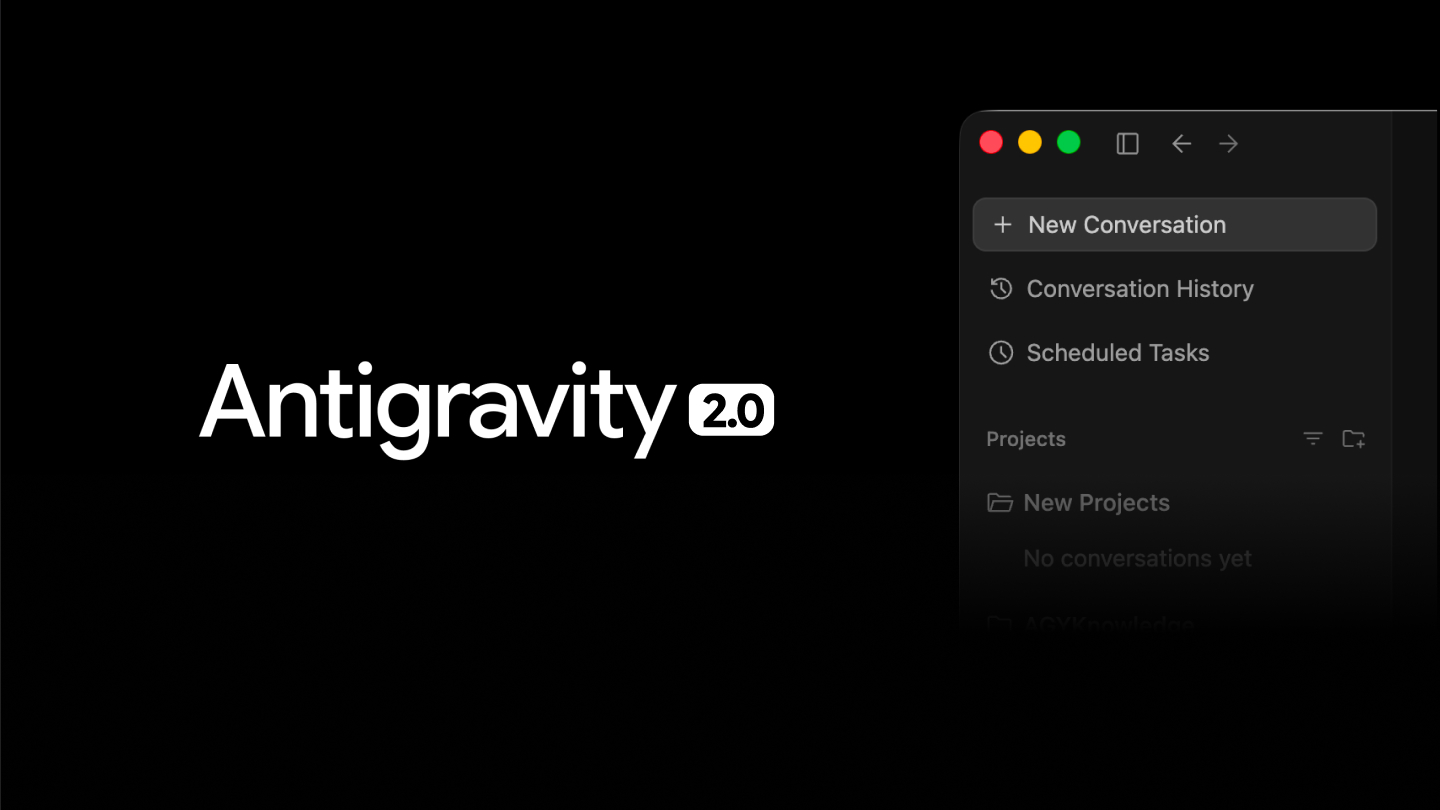
Image: Google, via the Antigravity 2.0 announcement
What happened: Google confirmed last week it will shut down Jules on December 31, with read-only access starting November 11. Now TestingCatalog has spotted what happens to Jules's signature trick: the latest Antigravity build has a local/cloud toggle above the prompt bar, a dev-only Running Jobs section for background tasks, Google Drive attachments in the prompt bar, and a Chief of Staff agent still in development.
Why it matters to designers and builders: cloud execution was Jules's core capability, connect a repo, let a task run asynchronously, come back to results. Landing it inside Antigravity means Google wants one tool for both live desktop work and long background runs, which is the same ambient-agent direction everyone else is chasing. If your workflow depends on Jules, the migration path just became visible.
What to do: if you are on Jules, export your sessions now and try Antigravity with a small repo. Everyone else, watch the Running Jobs feature when it ships.
Meituan shipped LongCat 2.5 for long agent coding runs

Image: Meituan LongCat, via the LongCat website
What happened: Meituan released LongCat 2.5 on November 2, a 1.6 trillion total parameter model with about 48 billion active per token, multimodal text and image input, and training aimed at sustained agent tasks. The standout detail: they convert real failures their agents hit into reproducible training tasks to close performance gaps.
Why it matters to designers and builders: the benchmark war is shifting from single clever answers to stamina, models meant to complete whole software projects over hours, not seconds. Training on agent failures is the most practical idea in the batch, because the failures you care about are exactly the ones your last run hit.
What to do: not a must-try today for design tools, but keep it on your model shortlist for long autonomous sessions.
itch.io doubled to 6,000 new game pages a day, and downloads did not follow

Image: itch.io, via Wikimedia Commons, public domain
What happened: on November 1, itch.io said new game pages created each day have doubled in two months, from roughly 3,000 a day in August to more than 6,000 on October 30, with Polygon's coverage pointing to AI-generated projects as the likely driver. The key line: downloads and purchases have not doubled. Supply raced ahead, demand stayed flat.
Why it matters to designers and builders: this is the clearest public data point yet on what happens when generation gets free and distribution does not. Anyone can now fill a storefront, so the shelf matters more than the factory. Curation, presentation, screenshots, and a landing page that respects the visitor are now the product.
What to do: if you ship AI-assisted work to a marketplace, spend your remaining energy on packaging and proof, not volume.
ADNOC became the first energy company in OpenAI's Frontier program

Image: OpenAI, via Wikimedia Commons, public domain
What happened: while Sam Altman traveled to Abu Dhabi, ADNOC and G42 signed a deal with OpenAI to deploy frontier AI capabilities across operations, making the Abu Dhabi oil giant the first energy company in the Frontier program, alongside agreements spanning energy, government and investment.
Why it matters to designers and builders: the Frontier program is where enterprise deployments get built with OpenAI's own support, and energy is one of the hardest domains to design for, heavy constraints, physical systems, real safety stakes. When frontier agents land in places like this, interface and workflow design matter even more, and they do not resemble startup dashboards.
What to do: watch how enterprise agent design looks in brownfield industries. If you design internal tools, the patterns will trickle down fast.
Our take
The common thread through today's brief: agents are getting a place to live. Antigravity builds them a home with background rooms, Meituan trains them for longer stays, itch.io shows what happens when everyone ships without one, and ADNOC shows frontier agents moving into heavy industry. Build with the assumption that agent work happens in the background and your only interface is the report it brings back.
Building something from today's news? Base44 is still the fastest way to go from idea to shipped app. Want practice reps instead? Try today's prompt at Daily Vibe Code.
Keep reading


Find Your Stack
Discover the perfect design tools for your workflow.
Take the 60-second quizNewForm Studio
Turn your designs into professional mockups instantly.
Open StudioMore from NewForm

Vibe Code Brief, November 1: Nine AI Platforms Breached in One Month
Nine AI platforms disclosed breaches in one October month, an Xbox manager deleted his AI admission, and New York set the first companion chatbot rules for minors.
4 min read · Nov 1, 2026

Vibe Code Brief, October 31: A Trojan Claude Code Extension Planted SSH Backdoors
Today: a tampered Claude Code extension shipped SSH backdoors through Cursor's marketplace, Google is shutting down Jules, Microsoft offered voluntary exits to 60,000 employees, and Roblox says 80 percent of its top games now use AI tools.
5 min read · Oct 31, 2026