
Claude Opus 5.5 Tops the Epoch AI Index: What Designers and Builders Should Actually Do
The AI leaderboard flipped this weekend, and the smartest response is to nod politely and go build something.
Anthropic's Claude Opus 5.5 now sits at the top of Epoch AI's Capabilities Index, the independent effort to put many benchmarks on one capability scale. The public scores show Claude Opus 5.5 at 167.33 against 166.45 for OpenAI's GPT-6 Astra. A 0.88 point gap, first flagged in industry coverage on Sunday, set off the usual victory laps: Anthropic is back, GPT-6 is finished, switch everything. Opus 5.5 launched on September 22, went out to Claude Pro subscribers without a price increase (hat tip to NotebookCheck), and Anthropic says it costs 40% less to run than Opus 5 on typical workloads.
Hold that thought.
 Image: Anthropic, via Introducing Claude Opus 5.5.
What almost everyone missed
Two things got buried under the celebration.
First, Epoch publishes confidence intervals, and they overlap almost completely. Opus 5.5 runs 164.06 to 171.68. GPT-6 Astra runs 163.34 to 171.46. On an honest statistical read, the two best models in the world are in a dead heat, and the 0.88 point gap is smaller than the noise in the measurement itself. Epoch's own methodology notes the score is assigned once per model family, which is exactly the kind of nuance a victory lap ignores.
Second, and this is the part that matters to us: the top of the market is now a price war, not just a quality race. In the same ten days this leaderboard fight played out:
- Anthropic launched Claude Haiku 5.5 on October 7 at about a tenth of Haiku 4.5's price for most requests, per Anthropic and PYMNTS.
- OpenAI cut GPT-6 Sol and Luna API prices by 50% (OpenAI announcement): Sol now runs $2 per million input tokens and $10 per million output tokens.
- Mistral opened its Large 4 API preview at half price during the launch window (PYMNTS).
Intelligence got 50% cheaper and 0.88 points smarter in the same week. Only one of those numbers is real.
Why the design angle matters here
Most of this coverage is written for backend developers arguing about tokens. But if you design for a living and you are moving into product work, this is your story too. The gap between "I have a Figma file" and "I have a shipping app" is built almost entirely on what a model can do cheaply enough to iterate on. Every price cut above is a cut to the cost of turning your design into a real, working product, and every tie at the top means you can stop agonizing over the choice and start spending that energy on the quality of what you feed it: your design tokens, your reference material, your prompt library, your taste.
That is the shift. When frontier models were far apart, model access was advantage. When they are statistically tied, the advantage moves to the layer we actually control.
My take
Leaderboard chasing is procrastination with extra steps. I have watched designers and builders burn entire weeks migrating their stack model to model this year, and every one of them shipped less than the person who picked one tool, learned it deeply, and finished the thing.
The 40% price drop is the real headline here, not the 0.88 points. If your work runs through agents all day (and if you are building client projects or side businesses with AI, it does), inference cost is now a line item, and falling prices mean you can iterate twice as much before lunch. That is genuinely great news for small teams and one-person studios.
And to be direct about my own ranking: when I want to go from prompt to a real product, I still reach for Base44 first. It is my number one pick for AI app builders precisely because the model wars matter less inside a good platform: it keeps the plumbing current while you keep the craft. Pick your model inside a good stack, not your stack around a model.
What to actually do this week
- Run your own eval, not Epoch's. Take your last ten real prompts or client tickets, run them through both models, and score the results. Your prompts are the benchmark that pays you.
- Price your iteration, not your subscription. A week of agent loops at current mid-tier prices now costs less than an hour of your billable time. That math should change how boldly you experiment.
- Keep your design system model-agnostic. Encode your tokens, variables, and spacing rules once so whichever model wins your eval, your system moves with you and does not get rebuilt. Design tokens are cheaper than rewrites.
- Never couple a product to a promotional tier. The same week this leaderboard flipped, Google pulled its newer Gemini models away from free and low-cost tiers. If a free tier is your foundation, you are renting your foundation.
- Ship something anyway. The person who shipped one mediocre app this week learned more than the person who watched the leaderboard all weekend. If you want a structured excuse, our Daily Vibe Code challenges give you one a day.
The short version
Claude Opus 5.5 topped the Epoch index by less than the margin of error, while every major lab slashed prices at the same time. Treat the flip as noise and the price war as signal. The moat moved up the stack, and that is exactly where designers and builders live.
Building something from this week's news? Base44 is still the fastest way I know to take an idea to a working app.
Find Your Stack
Discover the perfect design tools for your workflow.
Take the 60-second quizNewForm Studio
Turn your designs into professional mockups instantly.
Open StudioMore from NewForm
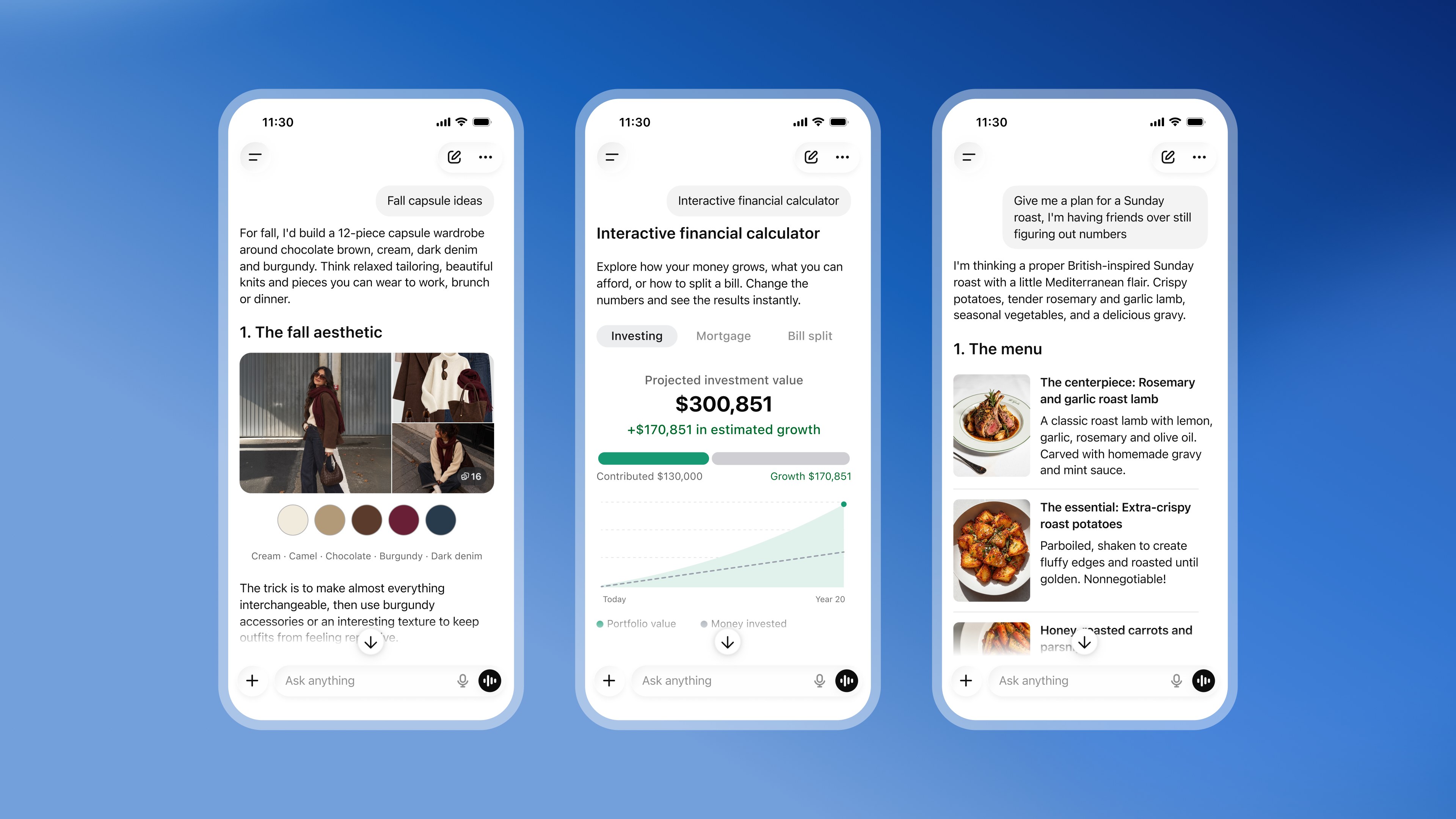
OpenAI's GPT-6 Intelligent UI Turns ChatGPT Into a Design Tool. Here's What Designers Should Do
OpenAI just trained an AI to make design decisions. Most coverage missed it. Here is what it means for designers and builders.
7 min read · Oct 10, 2026
ArtCraft Vibe-Coded All of Adobe Creative Cloud for Free: Why Designers Should Pay Attention
A solo developer used Claude Opus 5.5 to build free, open-source replacements for Photoshop, Premiere, Illustrator, and four more Adobe apps. The apps are early alpha. The implications for designers and software ownership are not.
6 min read · Oct 9, 2026