
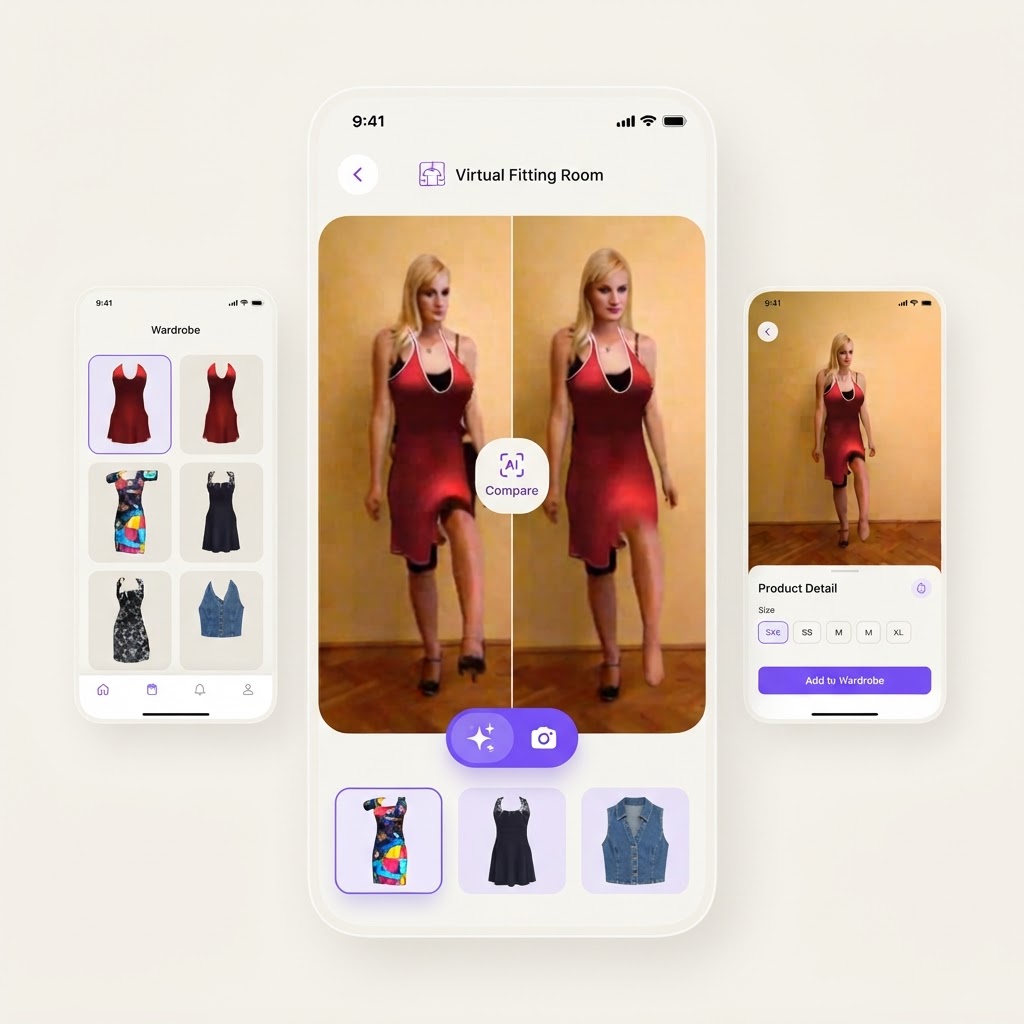
Yes, With Limits: AI Virtual Try-On Tool for E-commerce
An e-commerce tool that lets shoppers see products on themselves: clothing, glasses, and makeup try-on from a single photo, powered by specialized vision models.
Moat
The Prompt
Build an AI virtual try-on web app for e-commerce with these features:

1. Shopper onboarding: capture or upload one front-facing photo (with an explicit privacy notice, immediate processing, and delete-on-request). The app detects body and face landmarks and shows a fit guide so users know which angles work best. No account required to try; optional account to save looks.

2. Product catalog: merchants sync products via a feed (Shopify API, CSV, or manual entry) with product images, category, size range, and colors. Each product is tagged with a try-on type: eyewear, makeup, tops, dresses, hats, jewelry.

3. Try-on engine: integrate a dedicated virtual try-on vision model or API (for example hosted try-on models from major cloud AI providers) for realistic overlay. For unsupported categories, fall back to a clearly labeled 'lookbook preview' that composites a styled image beside the shopper's photo rather than faking an overlay.

4. Realistic rendering controls: adjust garment position and scale, switch colorways, and toggle side-by-side comparison with the flat product photo. Always label results as a visual approximation, not an exact fit prediction.

5. Size guidance: combine the try-on with a size quiz (height, usual size, fit preference) and show a recommended size per product, clearly separated from the visual preview so users do not read the image as a fit guarantee.

6. Gallery and sharing: save looks to a personal gallery, share links, and 'shop the look' buttons that carry the selected colorway and recommended size straight to checkout.

7. Merchant analytics dashboard: try-on counts per product, try-on to add-to-cart conversion, top-tried products, and drop-off points, so brands learn which products shoppers hesitate on.

8. Moderation and safety: automatic checks that uploaded photos are single-person, clothed, and appropriate; abuse reporting; and stored-photo auto-deletion windows with a published retention policy.

9. Performance and fallbacks: queue management for model calls, graceful fallback to lookbook mode when the try-on model is unavailable or confidence is low, and cached renders for repeated try-ons of the same product.

10. Embed mode: merchants can embed the try-on widget on their own product pages with a script tag, keeping analytics flowing back to the merchant dashboard.
What You Can Build
- ✓Photo upload with automatic body and face landmark detection
- ✓Garment or eyewear overlay on a single user photo
- ✓Try-on gallery with share links
- ✓Merchant product feed integration
What's Hard
- ✗Photorealistic accuracy varies a lot by category: eyewear and makeup work well, flowing garments and exact sizing do not. Dedicated try-on vision models are required for realistic results, hosted model APIs cost real money per render, and you must handle uploaded photos responsibly with clear privacy controls and honest labeling of approximation quality.
Required Screens
User Flow
Shopper uploads one photo -> picks a product from the catalog -> the vision model renders the product on their photo -> shopper adjusts or retakes -> saves or shares the look -> clicks through to buy
FAQ
Can AI build Yes, With Limits: AI Virtual Try-On Tool for E-commerce?
Verdict is Yes with limitations because this is a specialized computer vision problem, not a standard CRUD app. Generic image APIs can produce lookbook-style previews, but accurate garment draping, sizing, and realistic fabric behavior on a specific body need dedicated try-on vision models. The practical build path for an AI app builder: wrap a hosted try-on model API for the core rendering, keep your build focused on the shopper flow, catalog sync, and analytics, and set expectations that accuracy varies by product type (eyewear and makeup render better than flowing dresses). Expect a working MVP in 4 to 8 weeks.
How hard is it to build Yes, With Limits: AI Virtual Try-On Tool for E-commerce with AI?
It's rated Advanced. High
What tools do I need to build Yes, With Limits: AI Virtual Try-On Tool for E-commerce?
We recommend building it with Base44.
How long does it take to build Yes, With Limits: AI Virtual Try-On Tool for E-commerce with AI?
Estimated build time: 4-8 weeks.
Related Builds

Not sure which tools to use?
Find your stack →New projects added weekly
Get the latest "can AI build it?" projects in your inbox.