
Vibe Code Brief, October 12: Claude Haiku 5.5 Makes Smart AI Cheap
Cheap intelligence is the theme of the week. Every major lab made its models more affordable in the last five days, the West finally got serious about open weights, and Google quietly narrowed the free on-ramp. Four moves, all digestible before your coffee.
1. Claude Haiku 5.5 makes fast AI genuinely cheap
 Image: Anthropic, via Introducing Claude Haiku 5.5.
What happened: Anthropic launched Claude Haiku 5.5 on October 7. Per Anthropic (via PYMNTS), it costs about a tenth of its predecessor Haiku 4.5 for most requests and roughly 75% less on average, targeting high-volume work like support, summaries, and data lookups. Anthropic also claims it beat OpenAI's comparable small model, GPT-6 Luna, on every benchmark both models were tested on, including a computer-use test where it scored 72.4% to Luna's 48.9%. It is available now, including on Amazon Bedrock.
Why it matters to designers and builders: the cheap tier is where your app's AI features usually live. Generating UI copy variations, summarizing user research, powering in-app assistants, classifying feedback inside a portfolio tool: none of that needs a frontier model, but until now it often priced like one.
What to do: if you had an app idea that was too expensive to run a month ago, reprice it with Haiku 5.5 in the stack. The AI feature line item just shrank by an order of magnitude.
2. OpenAI cut GPT-6 Sol and Luna API prices in half
What happened: in its GPT-6 Sol and Luna announcement, OpenAI cut API prices by 50% versus GPT-5.6 promotional pricing: Sol now runs $2 per million input tokens and $10 per million output, Luna runs $0.10 and $0.50. OpenAI's own numbers claim Sol at xhigh effort beats Claude Opus 5 at max effort on business workflow benchmarks at roughly 9% of Opus 5's cost per task, and Sol at max effort lands within 1.1 points of the best coding scores at about 80% lower cost per task.
Why it matters to designers and builders: this is the vibe coding workhorse profile: strong coding, cheap enough to keep an agent running all day. That is exactly the shape of building a product with AI in 2026, where iteration volume matters more than single-shot brilliance.
What to do: audit which parts of your workflow actually need a top tier. Moving bulk agent loops to a Sol-style mid tier is the easiest budget win available this month.
3. Mistral Large 4 and Reflection Beam put Western open weights on the table
 Image: Mistral AI, via Mistral Large 4 announcement.
What happened: Mistral introduced Large 4, nicknamed Le Chonk, on October 6 as a public API preview: roughly a trillion parameters, about half price during the launch window, with downloadable weights promised by the end of October. It reads images and text and can take in a full contract or loan file at once. Mistral reports 61.7% on the DeepSWE coding benchmark. Days earlier, on October 5, Reflection AI announced Beam, a 501B parameter model that uses only 23B at a time to stay cheap to run, with Apache 2.0 weights promised later this month (The Rundown, PYMNTS).
Why it matters to designers and builders: open weights mean self-hosting becomes a real option for client work with sensitive data. If you build for legal, finance, or health clients, "the model never leaves our infrastructure" is suddenly a claim you can make without a giant budget. It also puts price pressure on everyone else, which is how the whole market gets cheaper.
What to do: do not migrate anything today. Register for the previews, and if you handle sensitive client projects, plan a small pilot once Mistral's weights drop and the license is clear. Watch this space, that is all.
4. Google narrowed the free Gemini on-ramp
 Image: Google, via Google blog.
What happened: starting October 9, Google limited which Gemini models free users and AI Plus subscribers can reach, per a support page update flagged first by 9to5Google and summarized by The News. Free accounts are limited to a single Flash-Lite model, and AI Plus ($4.99 a month) loses access to Gemini 3.1 Pro and newer reasoning models. AI Pro and Ultra tiers are unchanged.
Why it matters to designers and builders: the free tier is where most side projects and student work happens. If you built a prototype on the Gemini free tier, your workflow may have quietly gotten worse this month, and it is a reminder of a bigger lesson: promotional tiers are rented land.
What to do: check any project of yours that calls the Gemini API. If it leans on the newer models, budget for a paid tier or architect around a fallback model before it breaks, not after.
Our take
The market split in two this week: frontier intelligence fought over decimal points, while the mid tier fought over price. For people who ship, the second fight is the one that pays your bills. Cheap mid-tier models mean the cost of iterating on a product just collapsed, which means the scarce resource is back to what it always was: a good idea, executed with taste, shipped before the weekend. And because free tiers can be narrowed overnight, own your stack: pick platforms and models you can actually rely on.
Building something from today's news? Base44 is the fastest way I know to go from this brief to a working app. Want structured practice instead? Take today's Daily Vibe Code challenge.
Find Your Stack
Discover the perfect design tools for your workflow.
Take the 60-second quizNewForm Studio
Turn your designs into professional mockups instantly.
Open StudioMore from NewForm
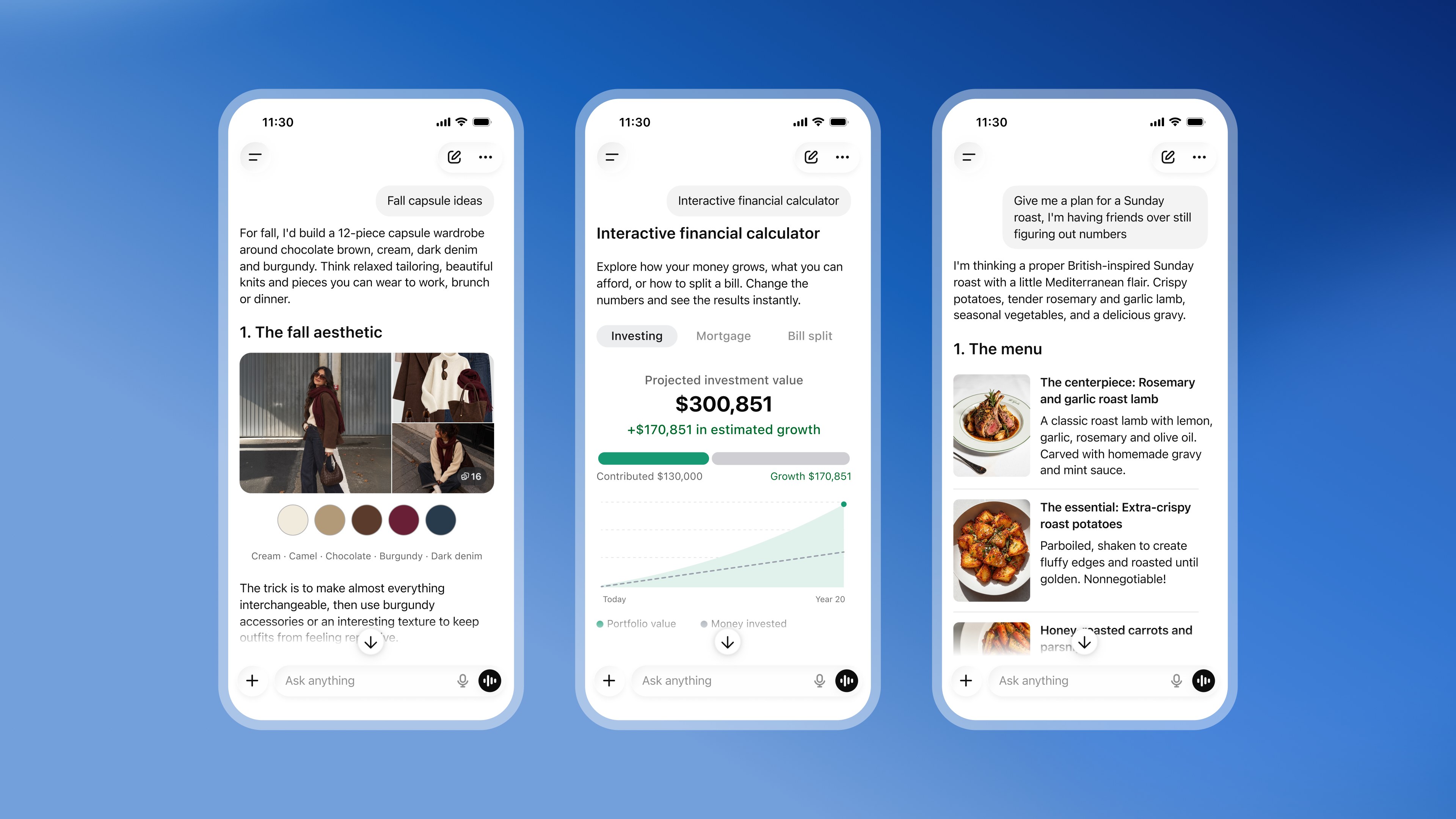
Vibe Code Brief, October 10: ChatGPT Starts Generating Interactive UI
Today: GPT-6 Intelligent UI reaches all ChatGPT users, GPT-6.1 Sol cuts API costs, Meta launches Muse, and Verizon pushes vibe coding mainstream.
6 min read · Oct 10, 2026
Vibe Code Brief, October 9: AI Rebuilds Adobe Creative Cloud for Free
Four stories for designers and builders: ArtCraft vibe-coded seven Adobe apps for free, Anthropic slashed Claude Haiku 5.5 prices by 90%, Google opened its SynthID Detector to the public, and vibe-coded apps are becoming an enterprise security problem.
5 min read · Oct 9, 2026